How to Learn Faster: Science-Backed Strategies
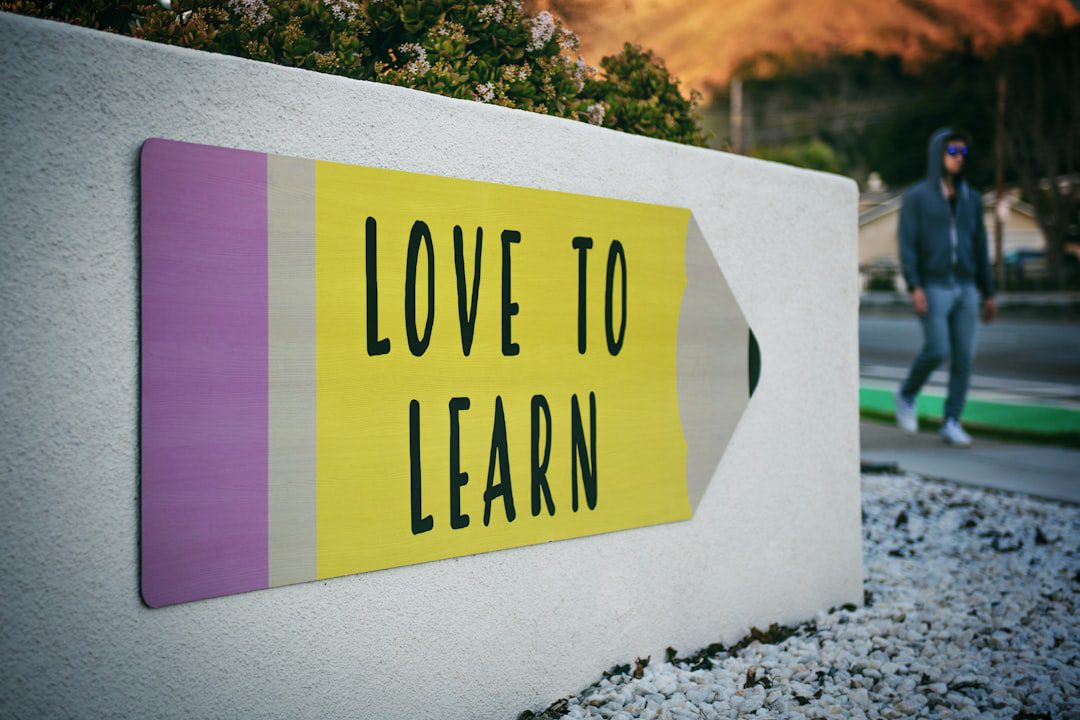
Most professionals hit the same wall. There’s always more to learn — new tools, new skills, new industries — but never enough time. If you’ve ever wondered how to learn faster without burning out or forgetting everything a week later, you’re asking exactly the right question. The good news? Speed of learning is a skill, not a gift. And like any skill, you can train it deliberately.
This guide covers the most effective, research-backed methods for accelerating how quickly you absorb, retain, and apply new information. No fluff. Just strategies that work.
Why Most People Learn Slowly (And How to Fix It)
The problem usually isn’t effort. Most slow learners actually work hard. However, they use inefficient methods — re-reading notes, passive highlighting, marathon study sessions — that feel productive but produce weak results.
Research published in Psychological Science in the Public Interest consistently shows that techniques like re-reading rank among the least effective learning strategies. In contrast, active retrieval and spaced practice produce dramatically better retention.
The core issue is this: passive exposure creates familiarity, not mastery. You recognize something when you see it, but you can’t reproduce or apply it. That’s a critical difference.
To fix it, you need to shift from consuming information to actively processing it. The sections below show you exactly how.
How to Learn Faster Using Spaced Repetition
Spaced repetition is one of the most powerful tools available to any learner. The concept is straightforward: review material at increasing intervals over time. Each review session reinforces the memory before it fully fades.
How It Works in Practice
Instead of cramming everything the night before, spread your reviews like this:
- Day 1: Learn the new material
- Day 2: First review (brief, 10–15 minutes)
- Day 5: Second review
- Day 14: Third review
- Day 30: Final consolidation review
This schedule exploits what psychologists call the “spacing effect.” Your brain strengthens a memory each time it retrieves it, especially when some forgetting has already begun.
Tools That Make This Easy
You don’t need to manage this manually. Several apps do it for you:
- Anki — Free, highly customizable flashcard software
- RemNote — Combines note-taking with built-in spaced repetition
- Readwise — Resurfaces highlights from books and articles automatically
Even 15 minutes of spaced review per day compounds significantly over months. Furthermore, it frees up time you’d otherwise waste re-learning forgotten material.
Active Recall: The Fastest Way to Lock In Knowledge
Active recall means forcing your brain to retrieve information rather than simply re-exposing it. In other words, instead of reading your notes again, close them and try to write down everything you remember.
This technique feels harder. That’s exactly the point.
The mental effort of retrieval is what builds durable memory. Researchers call this “desirable difficulty.” The struggle strengthens the neural pathways tied to that information.
Three Ways to Practice Active Recall
- Flashcards — Write the question on one side, the answer on the other. Test yourself before flipping.
- The blank page method — After reading a chapter, open a blank document and write everything you can recall. Then check your source for gaps.
- Teach it aloud — Explain the concept out loud, as if teaching someone else. This immediately exposes what you don’t truly understand.
In fact, a 2026 meta-analysis of learning strategies found that students using active recall consistently outperformed passive learners by 40–60% on retention tests taken two weeks later. The technique works across subjects — from legal theory to coding syntax to marketing frameworks.
The Feynman Technique: Understand Anything Deeply
Nobel Prize-winning physicist Richard Feynman had a deceptively simple rule: if you can’t explain something simply, you don’t understand it yet. His technique turns that rule into a four-step learning process.
The Four Steps
- Choose a concept — Pick one specific idea you want to master.
- Explain it in plain language — Write it out as if explaining to a 12-year-old. Avoid jargon entirely.
- Identify your gaps — Where did your explanation get fuzzy or vague? Those are your knowledge gaps.
- Go back and study those gaps — Return to your source material and fill in only what’s missing.
Most people skip step three. However, that step is where real learning happens. It forces intellectual honesty about what you actually know versus what you merely recognize.
This technique pairs well with reading habits. If you’re building a consistent reading practice, check out How to Read More Books: A Practical Guide for strategies that complement deep learning.
Optimize Your Environment and Schedule for Peak Learning
Even the best techniques fail in the wrong conditions. Therefore, your environment and schedule matter as much as your methods.
Time Your Learning Sessions Strategically
Cognitive performance follows a predictable daily rhythm. Most people experience a peak alertness window 2–4 hours after waking. This is your prime time for difficult, high-focus learning tasks.
- Morning peak (7–10 AM for most): Tackle complex new material, problem-solving, deep reading
- Afternoon trough (1–3 PM): Use this for spaced repetition reviews or lighter review tasks
- Evening recovery (5–8 PM): Good for creative connections, brainstorming, reflective journaling
Moreover, sleep is non-negotiable. Memory consolidation happens during sleep, particularly during REM cycles. Cutting sleep to study more is counterproductive. You lose more than you gain.
Design a Distraction-Free Learning Space
Your environment constantly signals your brain about what mode to enter. A few concrete changes make a measurable difference:
- Turn your phone face-down or into another room during sessions
- Use noise-cancelling headphones with white noise or instrumental music
- Set a visible timer (the Pomodoro method: 25 minutes on, 5 minutes off works well)
- Keep your learning space physically separate from your relaxation space
For a broader look at how structure drives performance, our guide on Time Management at Work covers complementary principles worth applying here.
Interleaving: The Counter-Intuitive Practice That Accelerates Learning
Most people study one topic at a time until they feel confident, then move to the next. This feels logical. However, research consistently shows it produces weaker long-term results than interleaving.
Interleaving means mixing different topics or problem types within a single study session. For example, instead of spending an hour on just algebra, you alternate between algebra, geometry, and statistics every 15–20 minutes.
Why Interleaving Works
- It forces your brain to continuously identify which strategy applies to each problem
- It reduces over-confidence from massed repetition of the same problem type
- It builds stronger discrimination between concepts — a critical skill in real-world application
Interleaving feels less comfortable than blocked practice. That discomfort is a signal that deep processing is happening. As a result, what feels harder in the short term produces better outcomes over time.
Build a Learning Habit That Actually Sticks
Knowing how to learn faster means nothing if you don’t actually do it consistently. Sporadic marathon sessions don’t build expertise. Daily habits do.
The Minimum Viable Learning Session
Commit to a minimum — not a maximum. A 20-minute daily session beats a 3-hour weekly session for long-term retention. Start small enough that skipping feels harder than doing it.
Here’s a simple daily learning routine structure:
- 5 minutes: Spaced repetition review (Anki or similar)
- 15–30 minutes: New material (reading, course, or practice)
- 5 minutes: Blank page recall — write down what you just learned
That’s 25–40 minutes total. Done daily, it compounds into remarkable skill development over a quarter.
Stack Your Learning Habit
Habit stacking means attaching a new habit to an existing one. For instance, if you already have a consistent morning exercise routine, schedule your learning session immediately after. The existing habit acts as a trigger.
Speaking of mornings — our post on Morning Exercise Routine for Busy Professionals outlines how to build a high-performance morning that supports mental sharpness throughout the day.
Frequently Asked Questions
How long does it take to learn a new skill faster using these methods?
Most people notice meaningful improvement in retention within 2–3 weeks of consistently using spaced repetition and active recall. Reaching genuine competency in a new skill typically takes 20–50 focused hours, depending on complexity. However, using the right methods compresses that timeline significantly compared to passive study.
Is there a best time of day to learn new information?
Yes. Most people perform best during their cognitive peak, which falls roughly 2–4 hours after waking. For the majority, that means between 8–11 AM. Use this window for demanding new material. Save reviews and lighter tasks for the afternoon.
Can adults learn as fast as younger people?
Adults actually have several learning advantages over younger people — stronger prior knowledge networks, better metacognition, and higher motivation. While raw processing speed may slow slightly with age, strategic learners in their 30s, 40s, and beyond routinely outperform younger passive learners. Method matters far more than age.
How do I know how to learn faster for my specific learning style?
The “learning styles” myth (visual, auditory, kinesthetic) has largely been debunked by modern research. Instead, focus on the learning strategy that matches the type of material. Concepts benefit from the Feynman Technique. Facts and vocabulary benefit from spaced repetition. Skills benefit from deliberate practice with feedback. Match the strategy to the content, not to a personality label.
Does exercise really help you learn faster?
Absolutely. Aerobic exercise increases BDNF (brain-derived neurotrophic factor), a protein that supports the growth of new neural connections. Even a 20-minute brisk walk before a study session measurably improves focus and memory encoding. It’s one of the highest-leverage things you can do to support faster learning.
Key Takeaways
Summary: How to Learn Faster — 3 Things That Matter Most
- Switch from passive to active: Replace re-reading with active recall and spaced repetition. The discomfort of retrieval is proof it’s working. Use tools like Anki to automate the schedule.
- Protect your conditions: Guard your cognitive peak hours, prioritize sleep, and eliminate distractions during learning sessions. Strategy without the right environment underperforms.
- Show up daily, not heroically: A consistent 25–40 minute daily routine built on proven techniques beats sporadic cramming every time. Habits compound; heroic efforts don’t.

More from Mind Stack
 Mind Stack
How to Stop Procrastinating for Good in 2026
Procrastination isn't a time management problem — it's an emotional one. This guide breaks down exactly how to stop procrastinating...
 Mind Stack
Decision Fatigue Solutions That Actually Work
Decision fatigue drains your mental energy faster than you think — and it quietly sabotages your best work. This guide...
 Mind Stack
How to Learn Faster: Proven Strategies That Work
Learning faster is not about cramming more hours into your day. It is about working smarter with proven techniques backed...