Critical Thinking Skills That Sharpen Your Mind
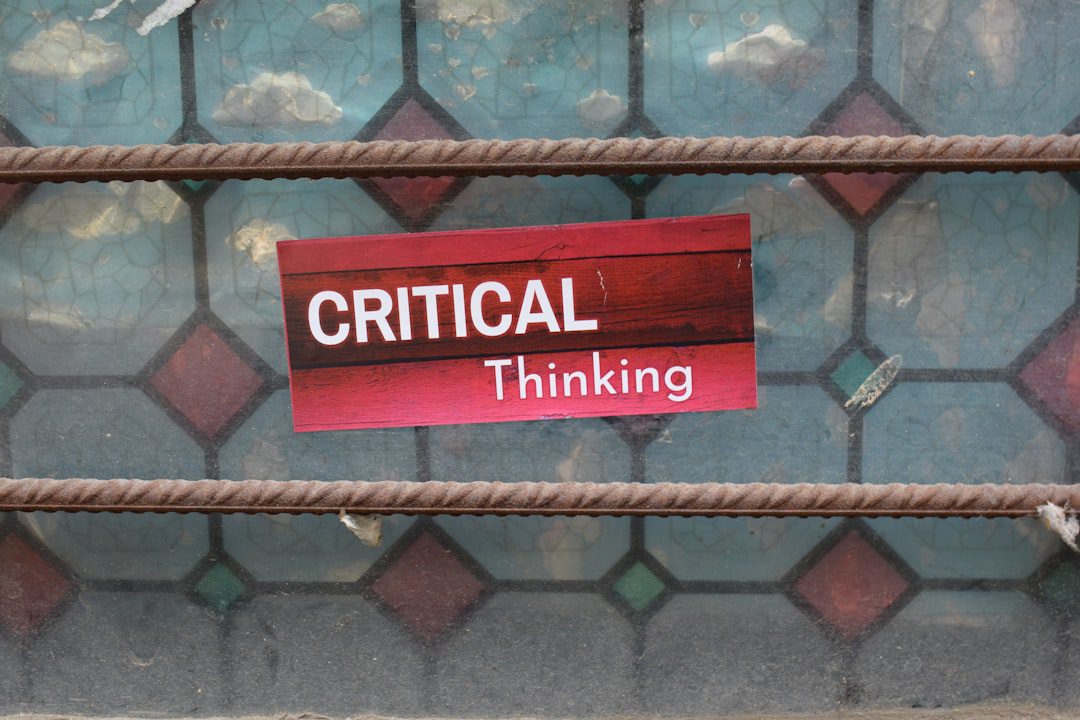
Most professionals think they reason clearly under pressure. Research consistently shows they don’t. Critical thinking skills — the ability to analyze information objectively, question assumptions, and reach sound conclusions — are among the most valuable yet underdeveloped skills in the modern workplace. In fact, a 2026 World Economic Forum Future of Jobs Report ranks analytical thinking as the single most in-demand skill across every major industry. The gap between professionals who cultivate this skill and those who don’t is growing fast. This guide gives you a concrete, practical roadmap to close that gap.
What Critical Thinking Skills Actually Mean
A lot of people confuse critical thinking with being skeptical or contrarian. However, that misses the point entirely. Critical thinking is a disciplined process — not a personality trait.
At its core, it involves four key abilities:
- Analysis — Breaking down complex information into manageable parts
- Evaluation — Judging the credibility and relevance of evidence
- Inference — Drawing logical conclusions from available data
- Self-regulation — Checking your own reasoning for errors and bias
For example, a project manager who hears “our Q1 numbers are down 18%” doesn’t just react. Instead, they ask: Compared to what baseline? What variables changed? Is this a trend or an outlier? That questioning process is critical thinking in action.
Most importantly, it’s a learnable skill. You don’t need a philosophy degree. You need the right habits and mental models — practiced consistently.
The 5 Core Critical Thinking Skills You Need in 2026
Not all thinking skills carry equal weight. Therefore, it helps to focus on the five that deliver the highest return in professional settings.
1. Structured Problem Framing
Before you solve a problem, you need to frame it correctly. In fact, most bad decisions start with a poorly defined problem. A common mistake is jumping to solutions before you’ve confirmed what the actual problem is.
Try this approach:
- Write the problem in one sentence
- Ask “Why does this problem exist?” at least three times (the “5 Whys” method)
- Rewrite the problem after each answer
- Compare your original framing to your final one
You’ll often discover the real problem is several layers deeper than you assumed.
2. Evidence Evaluation
Not all evidence is created equal. Furthermore, in an era of information overload, the ability to assess source quality is critical. Ask yourself three questions about any claim:
- Who produced this information, and what’s their incentive?
- Is this based on data, anecdote, or opinion?
- Does this source cite its own sources?
This habit alone will prevent costly errors in judgment — whether you’re evaluating a business proposal or reading an industry report.
3. Logical Argument Mapping
Strong thinkers understand argument structure. Specifically, they can identify a claim, the reasoning behind it, and the assumptions holding it together. When those assumptions are flawed, the entire argument collapses — regardless of how confident the speaker sounds.
Practice by reading opinion pieces and writing out:
- The main claim
- The supporting reasons
- The hidden assumptions
- Any logical fallacies present
4. Cognitive Bias Recognition
Your brain takes shortcuts. As a result, those shortcuts often lead you astray. The most dangerous biases for professionals include:
- Confirmation bias — Seeking information that confirms what you already believe
- Sunk cost fallacy — Continuing a failing strategy because you’ve already invested in it
- Availability heuristic — Overweighting recent or memorable events
- Authority bias — Deferring to someone senior rather than evaluating their actual reasoning
Simply naming a bias when you notice it firing can interrupt the pattern. It’s a small habit with a large payoff.
5. Intellectual Humility
The most effective critical thinkers hold their conclusions loosely. Moreover, they actively seek disconfirming evidence. This isn’t weakness — it’s strategic. People who update their beliefs based on new information consistently outperform those who don’t, both in accuracy and in trust earned from colleagues.
How to Build Critical Thinking Skills Daily
Reading about critical thinking won’t make you better at it. Practice does. Here are daily habits that build the skill systematically.
The Morning Question Habit
Start each day by writing one question you want to think through — not a task, but a genuine question. For example: “Why did our last campaign underperform despite strong creative?” or “What assumption am I making about this client relationship?”
Then spend 10 minutes writing your thinking, not your answer. This trains your brain to explore rather than conclude prematurely.
Pair this with a strong morning routine. Our guide on morning exercise routines for professionals shows how physical habits amplify mental clarity — and the two work exceptionally well together.
The “Steel Man” Practice
Most people know the straw man fallacy — misrepresenting someone’s argument to knock it down easily. The steel man is the opposite. Before dismissing any position, construct the strongest possible version of it. Then evaluate that version.
This practice does two things. First, it sharpens your ability to understand opposing views accurately. Second, it forces you to examine whether your counterargument actually holds up under pressure.
Pre-Mortem Analysis
Before launching any project or making a significant decision, run a pre-mortem. Assume the initiative has already failed — completely. Then work backwards to identify every possible reason why.
This technique, developed by psychologist Gary Klein, surfaces risks that forward-looking planning often misses. Moreover, it gives your team permission to voice concerns they might otherwise suppress.
Read Widely and Deliberately
Narrowly focused reading creates narrowly focused thinking. Therefore, make a deliberate effort to read outside your domain every week. History, cognitive science, philosophy, and biography all build the kind of broad mental library that fuels strong reasoning. Our no-fluff guide to reading more books gives you a practical system for fitting this into a busy schedule.
Critical Thinking Skills at Work: Real Scenarios
Abstract concepts only matter if they translate into real situations. Here’s how these skills play out in the workplace.
Scenario 1: Evaluating a New Strategy
Your director presents a pivot: the team will shift focus from enterprise clients to SMBs. Instead of nodding along, a critical thinker asks:
- What data supports this shift?
- What assumptions does this strategy rely on?
- What’s the cost of being wrong?
- Are there alternative explanations for the current performance gap?
These questions don’t signal resistance. On the contrary, they signal strategic maturity — and they often surface blind spots before they become expensive.
Scenario 2: Navigating Conflict
Two teammates disagree sharply on an approach. Rather than picking a side based on seniority or likability, a critical thinker maps each argument. They identify the specific point of disagreement — is it a difference in values, in data interpretation, or in risk tolerance? That clarity accelerates resolution dramatically.
Scenario 3: Career Decisions
Should you take the promotion that comes with a 20% salary increase but significantly more stress? Furthermore, is the stress temporary or structural? What are the opportunity costs? Critical thinking skills help you evaluate decisions like this with rigor rather than pure emotion — or pure inertia.
Standing out at work often starts with exactly this kind of thinking. See our post on how to stand out at work and get noticed for how sharper thinking connects directly to professional visibility.
Mental Models That Supercharge Critical Thinking
Mental models are frameworks that help you think more clearly about complex situations. Therefore, building a strong mental model library is one of the highest-leverage investments you can make.
Here are five models every professional should know:
- First Principles Thinking — Strip a problem down to its most basic, proven truths. Rebuild your solution from there, rather than copying existing approaches.
- Inversion — Instead of asking “How do I succeed?” ask “What would guarantee failure?” Then avoid those things. Often more powerful than forward planning.
- Second-Order Thinking — Ask not just “What happens if I do this?” but “And then what happens after that?” Most people stop at first-order consequences.
- Occam’s Razor — When multiple explanations exist, prefer the simplest one that fits the evidence. Complexity is often a sign of confused thinking, not sophisticated analysis.
- The Map Is Not the Territory — Your mental model of a situation is never the same as the situation itself. Therefore, always check your assumptions against actual reality.
These models don’t give you answers. However, they give you better questions — which is often more valuable.
Common Mistakes That Undermine Critical Thinking Skills
Even well-intentioned thinkers fall into predictable traps. Recognizing these patterns helps you sidestep them.
- Mistaking confidence for competence. A speaker’s certainty tells you nothing about their accuracy. Evaluate the argument, not the delivery.
- Overgeneralizing from single data points. One failed product launch doesn’t mean the market is saturated. One successful hire doesn’t validate an entire recruitment process.
- Conflating correlation with causation. Two things happening together doesn’t mean one caused the other. Always ask: what else changed at the same time?
- Analysis paralysis. On the other hand, overcorrecting into endless analysis is its own failure mode. Critical thinking includes knowing when you have enough information to act.
- Groupthink deference. In team settings, the pressure to conform can suppress valid dissent. Strong critical thinkers create psychological safety for disagreement — including their own.
Frequently Asked Questions
Can you actually improve critical thinking skills as an adult?
Absolutely. Critical thinking is a cognitive skill, not a fixed trait. Research in neuroplasticity confirms that adults can build new reasoning habits well into later life. The key is deliberate practice — not passive exposure. Consistent habits like pre-mortems, structured journaling, and argument mapping produce measurable improvement within weeks.
How long does it take to develop strong critical thinking skills?
You’ll notice a difference within 30 days of consistent practice. However, deep proficiency takes longer — typically six to twelve months of daily application. Think of it like building physical strength. Short sessions done regularly outperform occasional intense efforts.
What’s the difference between critical thinking and analytical thinking?
Analytical thinking focuses specifically on breaking down data and identifying patterns. Critical thinking is broader — it includes analysis, but also evaluation of assumptions, logical validity, and self-awareness of bias. In practice, strong critical thinkers are also strong analytical thinkers, but not always vice versa.
How do critical thinking skills help with decision-making under pressure?
Pressure narrows cognitive bandwidth. As a result, people under stress tend to default to System 1 thinking — fast, intuitive, and bias-prone. Strong critical thinking skills give you trained reflexes: structured questions and frameworks that activate even when you’re stressed. They don’t eliminate emotion, but they prevent emotion from hijacking your reasoning entirely.
Are there books that specifically build critical thinking skills?
Several stand out. Thinking, Fast and Slow by Daniel Kahneman is the definitive primer on cognitive bias and dual-process thinking. The Scout Mindset by Julia Galef focuses on intellectual honesty and belief updating. A Mind for Numbers by Barbara Oakley covers learning strategies that underpin strong reasoning. All three are practical, not academic.
Key Takeaways
Here’s what to carry forward from this guide:
- Critical thinking skills are built through daily habits — not occasional effort. The morning question practice, pre-mortem analysis, and steel-manning are all low-cost, high-return routines you can start today.
- Mental models are leverage. A small library of frameworks — first principles, inversion, second-order thinking — consistently produces better decisions than raw intelligence or experience alone.
- Self-awareness is the foundation. Recognizing your own cognitive biases — confirmation bias, sunk cost fallacy, authority bias — is the prerequisite for everything else. You can’t correct reasoning errors you can’t see.

More from Mind Stack
 Mind Stack
Guided Meditation for Beginners Sleep Guide
Struggling to fall asleep? Guided meditation for beginners sleep is one of the most accessible and science-backed tools for getting...
 Mind Stack
Spaced Repetition Learning: The Ultimate Guide
Spaced repetition learning is one of the most research-backed methods for retaining information long-term — yet most professionals never use...
 Mind Stack
How to Read More Books: A Practical Guide
Reading more books is one of the highest-return habits a professional can build — but most people struggle to stay...