Setting Goal Example: A Practical Guide

You’ve probably set a goal that died before February. Most people have. The difference between goals that stick and goals that don’t usually comes down to one thing: how they’re written. A clear, well-structured setting goal example can be the blueprint that separates intention from real action. In this guide, you’ll find proven frameworks, concrete examples, and a repeatable system you can use starting today.
Why Most Goals Fail Before They Start
Goals fail for predictable reasons. Understanding those reasons is the first step toward fixing them.
Research from the American Psychological Association confirms that vague goals produce vague results. When a goal lacks specificity, your brain has no clear target to aim at.
Here are the most common goal-setting mistakes professionals make:
- Too broad: “I want to grow my business” gives you nothing to act on.
- No deadline: Without a date, urgency disappears entirely.
- No measurement: If you can’t track it, you can’t improve it.
- Outcome-only focus: Focusing only on results ignores the process that gets you there.
- Too many at once: Pursuing five major goals simultaneously dilutes your focus on all of them.
Most importantly, a goal without a system is just a wish. Let’s build the system.
The SMART Framework: The Gold Standard Setting Goal Example
The SMART framework remains the most widely used goal-setting method for professionals — and for good reason. It forces clarity at every level.
SMART stands for:
- S – Specific: What exactly do you want to achieve?
- M – Measurable: How will you know you’ve succeeded?
- A – Achievable: Is this realistic given your current resources?
- R – Relevant: Does this align with your bigger priorities?
- T – Time-bound: What is your exact deadline?
SMART Setting Goal Example: Career Growth
Weak goal: “I want to get promoted.”
SMART version: “I will earn a senior marketing manager title by December 31, 2026, by leading two cross-functional campaigns, completing a leadership certification, and scheduling monthly performance reviews with my director.”
Notice the difference. The SMART version tells you exactly what to do, when to do it, and how to measure progress. That specificity is what makes it actionable.
SMART Setting Goal Example: Revenue
Weak goal: “I want to make more money.”
SMART version: “I will increase my freelance revenue from $4,000 to $6,500 per month by June 30, 2026, by adding two retainer clients and raising my hourly rate by 20%.”
If you’re figuring out how to price those services, our guide on how to price your services and get paid what you’re worth is a natural next step.
Beyond SMART: The OKR Setting Goal Example
SMART goals work well for individuals. However, OKRs — Objectives and Key Results — work especially well for teams, projects, and quarterly planning cycles.
The structure is straightforward:
- Objective: A qualitative, inspiring goal statement.
- Key Results: 2–4 measurable outcomes that define success.
OKR Setting Goal Example: Content Creator
Objective: Establish authority as a leading voice in B2B SaaS content by Q2 2026.
Key Results:
- Publish 12 long-form articles (1,500+ words) on the company blog by March 31.
- Grow organic monthly traffic from 8,000 to 20,000 sessions by June 30.
- Earn 3 guest publication features on industry sites with 50K+ monthly readers.
- Achieve an average email open rate of 38% across all Q1 and Q2 campaigns.
OKRs push you to think bigger. Furthermore, they connect daily work to meaningful outcomes — which keeps motivation high even on slow days.
OKR Setting Goal Example: Small Business Owner
Objective: Build a sustainable, referral-driven client pipeline in 2026.
Key Results:
- Generate 15 qualified referrals per quarter through a structured referral program.
- Achieve a Net Promoter Score (NPS) of 75 or above by Q3.
- Close 80% of referral-sourced leads within 30 days of first contact.
Personal Goal Examples Across Life Categories
Professional goals get most of the attention. However, personal goals drive the energy and discipline that fuel everything else. Here’s a setting goal example for each major life area.
Health and Fitness
- Goal: Run a half-marathon by October 2026.
- Action plan: Follow a 16-week training schedule, run 4 days per week, and track mileage using a fitness app.
- Milestone check-ins: Complete a 10K race at week 8 as a progress benchmark.
Learning and Skills
- Goal: Become conversationally fluent in Spanish by December 2026.
- Action plan: Practice 20 minutes daily on a language app, join a weekly conversation group, and complete one online course per quarter.
- Measurement: Pass a B1 proficiency assessment by September.
Financial
- Goal: Save $10,000 as an emergency fund by August 2026.
- Action plan: Auto-transfer $1,250 per month into a dedicated high-yield savings account.
- Milestone: Reach $5,000 by April and celebrate with a low-cost reward.
For more on building that financial buffer, check out our Emergency Fund Guide: Build Your Safety Net.
Relationships and Community
- Goal: Strengthen your professional network in 2026.
- Action plan: Attend one industry event per month, send two personalized LinkedIn messages per week, and schedule one coffee chat per month with a new contact.
- Measurement: Add 60 meaningful connections to your network by year-end.
How to Structure Your Goals: A Step-by-Step Template
A great setting goal example is only useful if you have a repeatable process. Therefore, use this template for every major goal you set.
- Write the goal in one sentence. Be specific. Include numbers and a deadline.
- Identify your “why.” State the deeper reason this goal matters to you.
- List 3–5 action steps. These are the weekly behaviors that drive progress.
- Define your measurement. Choose 1–3 metrics to track weekly or monthly.
- Set milestone dates. Break the goal into 30, 60, and 90-day checkpoints.
- Anticipate obstacles. Write down your top two barriers and your plan to handle them.
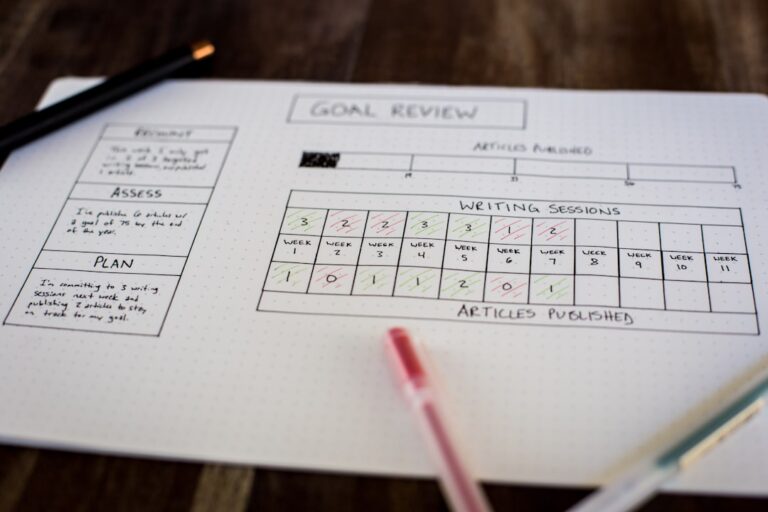
- Schedule a weekly review. Block 15 minutes every Sunday to assess your progress.
This process takes about 20 minutes per goal. In addition, writing goals by hand — rather than typing them — increases retention and commitment, according to multiple cognitive science studies.
Common Goal-Setting Mistakes to Avoid in 2026
Even experienced professionals fall into these traps. Watch for them carefully.
Setting Too Many Goals at Once
Focus is finite. As a result, pursuing more than three major goals simultaneously typically means achieving none of them well. Choose your top three for the year. Then, give them your full attention.
Skipping the Review Process
A goal without a review schedule is a goal without accountability. Therefore, build your review cadence into your calendar the same day you write the goal.
For tools that make tracking easier, explore our roundup of the best productivity apps of 2026.
Confusing Activity with Progress
Being busy is not the same as moving forward. For example, attending five networking events means nothing if you never follow up. Always tie activity to a measurable outcome.
Giving Up After a Miss
Missing a milestone doesn’t mean the goal is dead. On the other hand, it’s data. Analyze what happened, adjust your approach, and keep moving. Consistency over perfection wins every time.
If procrastination is part of the problem, our guide on how to stop procrastinating for good in 2026 addresses the root causes directly.
Goal Setting for Teams and Work Environments
Individual goals are powerful. However, team goals require an extra layer of coordination and clarity.
Here’s a setting goal example designed for a team context:
Team Goal Example: Sales Team Q1 2026
Goal: Increase qualified pipeline by 40% in Q1 2026 through improved outbound prospecting.
Team action plan:
- Each rep conducts 20 personalized outreach sequences per week.
- The team holds a 30-minute pipeline review every Monday morning.
- Marketing provides two new lead magnets by January 15.
- The manager reviews call recordings weekly and delivers feedback within 48 hours.
Success metrics:
- Pipeline value reaches $800,000 by March 31.
- Conversion rate from outreach to discovery call hits 12%.
- Average deal size increases by 15% compared to Q4 2025.
Notice that every team member has a clear role. Furthermore, the timeline and measurement are non-negotiable. That shared clarity drives collective accountability.
Frequently Asked Questions
What is a simple setting goal example for beginners?
A great beginner-friendly setting goal example is: “I will read one business book per month for six months, finishing by June 30, 2026, to improve my negotiation skills.” It’s specific, measurable, achievable, relevant, and time-bound — without being overwhelming.
How many goals should I set at one time?
Most high performers recommend focusing on no more than three major goals simultaneously. You can have smaller supporting goals underneath each one. However, limiting your primary focus to three prevents the dilution that kills most goal-setting efforts.
What’s the difference between a goal and a habit?
A goal is a specific outcome you want to achieve by a certain date. A habit is a repeated behavior that supports that outcome. For example, “publish a book by December 2026” is a goal. “Write 500 words every morning” is the habit that gets you there. Both matter — but they serve different purposes.
How often should I review my goals?
A weekly micro-review (15 minutes) and a monthly deep-dive (60 minutes) is the most effective combination. The weekly check-in keeps you on track day-to-day. The monthly review gives you space to assess whether the goal itself still makes sense and adjust your strategy if needed.
Can I use a setting goal example from someone else as my own?
You can absolutely use examples as starting templates. However, always customize them to your specific numbers, deadlines, and context. A goal that feels personally relevant and connected to your values is significantly more likely to drive sustained action than a generic template.
Key Takeaways
Before you close this tab, remember these three things:
- Specificity is everything. Every effective setting goal example includes a clear outcome, a measurable number, and a firm deadline. Vague goals produce vague results.
- The system beats the goal. Goals tell you where to go. Your weekly habits, review schedule, and action steps are what actually get you there. Build both.
- Adjust without quitting. Missing a milestone is feedback, not failure. The professionals who achieve the most are the ones who adapt and stay in the game — not the ones who never stumble.
Now pick one goal. Write it using the SMART template above. Schedule your first weekly review. That’s all it takes to start.

More from Mind Stack
 Mind Stack
How to Focus Better: Proven Strategies That Work
Deep focus is a skill — and in 2026, it's one of the most valuable ones you can build. This...
 Mind Stack
Setting Goal Example: How to Set Goals That Stick
Most people set goals and abandon them within weeks. This guide breaks down every setting goal example you need —...
 Mind Stack
How to Focus Better at Work (That Actually Work)
Distraction is expensive — and most professionals underestimate how much it costs them. This guide breaks down exactly how to...