Best Books for Self Improvement in 2026
Why the Best Books for Self Improvement Still Matter in 2026
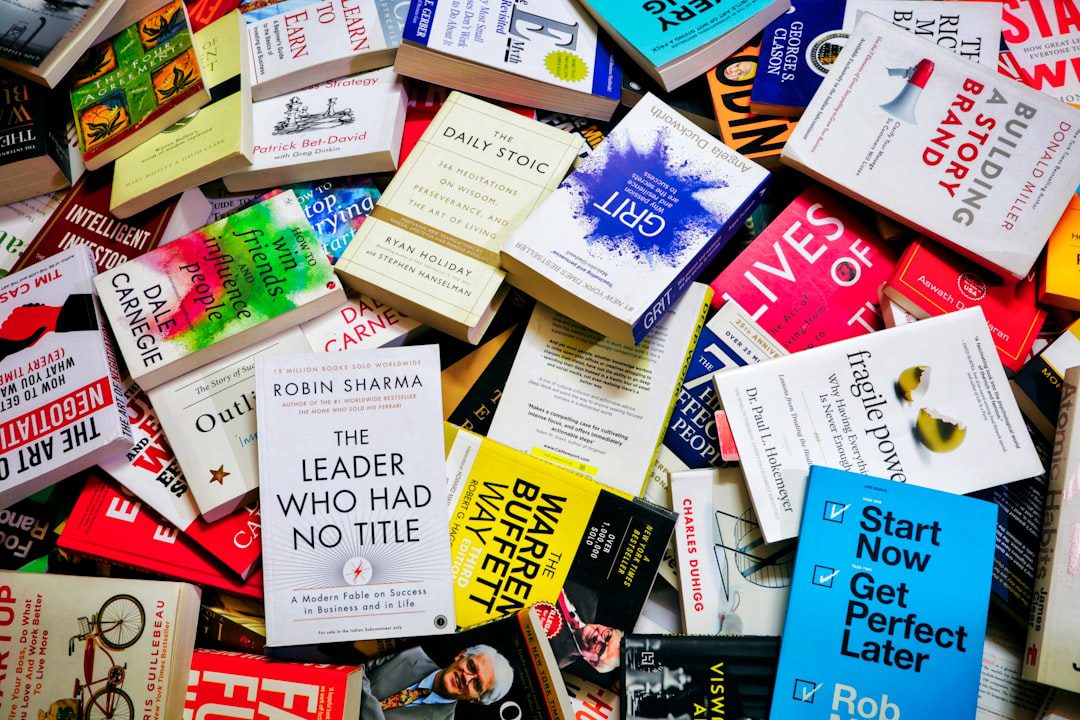
Everyone is hunting for an edge. The best books for self improvement remain one of the highest-return investments a professional can make — a $20 book can rewire how you think for decades. Yet most people either read the wrong books or read the right ones passively, without applying anything.
This guide fixes both problems. It gives you a curated, category-by-category breakdown of the most impactful self-improvement books available in 2026. More importantly, it tells you why each book earns its place and who will benefit most.
Furthermore, every pick here has been selected with one type of reader in mind: the busy professional who wants real results, not just motivation that fades by Monday morning.
How to Actually Benefit From the Best Books for Self Improvement
Before diving into the list, let’s establish one ground rule. Reading a self-improvement book without a system is like going to the gym without a program — you show up, you sweat, but you don’t progress.
Here’s a simple framework to apply to every book on this list:
- Read with a single question in mind. Before you open the book, write down the one problem you want it to solve.
- Highlight ruthlessly. Mark only what you’d act on within 30 days. Everything else is context.
- Close the book and write three action items. Immediately after finishing, not a week later.
- Schedule a review. Return to your highlights 30 days after finishing. This is where retention actually happens.
In addition, consider pairing your reading habit with a structured digital detox routine. Reducing screen noise before bed creates the focused mental space that serious reading demands.
Best Books for Self Improvement: Habits and Daily Discipline
Habits are the architecture of your life. Therefore, building the right ones — and dismantling the wrong ones — is the most leveraged thing you can do.
Atomic Habits by James Clear
This book has sold over 20 million copies for a reason. Clear’s core argument is simple: you don’t rise to the level of your goals, you fall to the level of your systems. He introduces the “1% better every day” framework, which compounds dramatically over a full year.
Best for: Professionals who feel stuck despite working hard.
The most actionable concept is habit stacking — attaching a new behavior to an existing one. For example, if you already make coffee every morning, that’s your anchor for a five-minute journaling habit.
The Power of Full Engagement by Jim Loehr and Tony Schwartz
Most productivity books focus on managing time. This one argues that energy, not time, is your most important resource. Loehr and Schwartz draw on research from elite athletes and apply it to corporate performance.
Best for: High-output professionals experiencing burnout or chronic fatigue.
Mindset and Mental Performance
Your external results are almost always a reflection of your internal operating system. These books help you upgrade it.
Mindset: The New Psychology of Success by Carol S. Dweck
Dweck’s research at Stanford introduced the world to the concept of the growth mindset vs. fixed mindset. The distinction is straightforward: people with a growth mindset believe abilities are developed through effort. Those with a fixed mindset believe talent is innate and static.
Moreover, Dweck provides clear examples of how each mindset plays out in careers, relationships, and education. The self-assessment exercises alone make this book worth re-reading annually.
Best for: Anyone who secretly believes they’ve “hit their ceiling.”
Thinking, Fast and Slow by Daniel Kahneman
Nobel Prize-winning psychologist Daniel Kahneman breaks human thinking into two systems. System 1 is fast, emotional, and instinctive. System 2 is slow, deliberate, and logical. Understanding both helps you make better decisions under pressure — a critical skill for any professional.
In fact, pairing this book with our guide on critical thinking skills that sharpen your mind creates a powerful one-two punch for mental performance.
Best for: Leaders, analysts, and anyone making high-stakes decisions regularly.
Emotional Intelligence and Relationships
Technical skills get you in the door. Emotional intelligence determines how far you go once you’re inside. These are the best books for self improvement in the interpersonal domain.
Emotional Intelligence by Daniel Goleman
Goleman’s landmark 1995 work — still fully relevant in 2026 — argues that EQ (emotional intelligence) predicts professional success more reliably than IQ. He breaks EQ into five components: self-awareness, self-regulation, motivation, empathy, and social skill.
According to Harvard Business Review, emotional intelligence accounts for nearly 90% of what separates top performers from peers with similar technical skills. That statistic alone should put this book at the top of your list.
Best for: Managers, team leads, and professionals who want to accelerate their careers.
Never Split the Difference by Chris Voss
Former FBI hostage negotiator Chris Voss teaches negotiation techniques that work in both high-stakes and everyday professional contexts. His “tactical empathy” framework is especially powerful. Additionally, the book is packed with real negotiation transcripts that make the lessons stick.
Best for: Anyone who wants to negotiate better outcomes — in the boardroom or at home. Pair it with our salary negotiation scripts guide to put these techniques into immediate practice.
Productivity and Focus for Professionals
Productivity books often disappoint because they optimize the wrong thing. The best ones help you choose the right work, then execute it without distraction.
Deep Work by Cal Newport
Newport defines deep work as professional activities performed in a state of distraction-free concentration that push your cognitive capabilities to their limit. He makes a compelling case that this skill is becoming increasingly rare and increasingly valuable simultaneously.
His four-quadrant scheduling method and the “shutdown ritual” are two immediately actionable tools. Most readers report a measurable increase in output quality within two weeks of applying them.
Best for: Knowledge workers who feel busy but not productive.
Essentialism: The Disciplined Pursuit of Less by Greg McKeown
This book is a direct answer to the modern professional’s biggest problem: doing too much of the wrong things. McKeown argues that the path to peak performance isn’t doing more — it’s doing less, but better.
Furthermore, the concept of the “essential intent” — one clear, inspiring, concrete goal — is a framework that translates directly to how professionals structure their careers and weeks.
Best for: Overcommitted professionals who need to reclaim their focus and energy.
Financial Mindset and Wealth Building
Self-improvement extends beyond personal habits. Financial literacy is a core life skill, and these books build the right money mindset from the ground up.
The Psychology of Money by Morgan Housel
Housel’s 2020 bestseller remains one of the best books for self improvement in 2026 — specifically in how it reframes money as a behavioral challenge, not a math problem. His key insight: doing well with money has little to do with how smart you are and a lot to do with how you behave.
The chapter on “reasonable vs. rational” financial decisions is worth the price of the book alone. It gives you permission to make good-enough decisions consistently rather than perfect decisions rarely.
Best for: Professionals who earn well but feel anxious or confused about money. Supplement it with our Investing for Beginners 2026 guide to turn mindset into action.
I Will Teach You to Be Rich by Ramit Sethi
Sethi’s no-nonsense, system-focused approach to personal finance is perfect for professionals in their 20s and 30s. He covers automation, credit, investing, and negotiating raises in one actionable package. As a result, readers move from financial confusion to a functioning money system — often within a single weekend.
Best for: Young professionals building financial foundations.
Mental Health, Resilience, and Wellbeing
No self-improvement stack is complete without books that address the psychological foundation underneath everything else. These titles go beyond motivational platitudes.
Man’s Search for Meaning by Viktor Frankl
Psychiatrist Viktor Frankl survived Nazi concentration camps and emerged with a philosophy of human resilience. His central argument: we cannot always control what happens to us, but we can always choose our response. This is perhaps the most important lesson in any self-improvement book, ever.
Moreover, this book is short — under 200 pages — but dense with insight. Most professionals finish it in a single weekend and revisit it every few years.
Best for: Anyone facing adversity, burnout, or a crisis of purpose.
For additional support and resources on this topic, explore our guide to mental health resources every professional needs.
The Obstacle Is the Way by Ryan Holiday
Holiday adapts Stoic philosophy — particularly Marcus Aurelius and Seneca — for modern professionals. The core principle is counterintuitive: the thing blocking your path is the path. Obstacles, therefore, become fuel for growth rather than reasons to stop.
Best for: High performers navigating career setbacks or organizational friction.
Frequently Asked Questions
How many self-improvement books should I read per year?
Quality matters more than quantity. Reading 12 books per year — one per month — and genuinely applying each one will produce better results than racing through 50. Most top performers read one focused book per month and review their highlights quarterly.
What are the best books for self improvement for beginners?
Start with Atomic Habits by James Clear for behavioral foundations, then move to Mindset by Carol Dweck for perspective. These two books together address both the “how” and the “why” of personal growth. From there, pick a category — finance, relationships, focus — based on your most pressing challenge.
Are audiobooks as effective as reading physical books?
Research suggests that comprehension and retention are similar for narrative and concept-driven books when you listen actively. However, for technical or dense material — like Thinking, Fast and Slow — a physical or digital copy allows you to re-read passages more easily. Many professionals use both formats: audiobooks for commutes, print for deep reading sessions.
How do I stay consistent with reading?
Tie reading to an existing habit (habit stacking, as Clear recommends). Common anchors include morning coffee, lunch breaks, or the 20 minutes before sleep. Additionally, setting a modest daily target — 10 pages rather than 30 — dramatically improves consistency. Ten pages a day equals roughly 15 books per year.
Do self-improvement books actually work?
They work when you treat them as tools, not entertainment. The books themselves don’t change behavior — your application of their ideas does. The professionals who report the greatest benefit from self-improvement reading share one habit: they write down at least three specific actions after every book and revisit those notes within 30 days.
Key Takeaways
Summary: Your 2026 Self-Improvement Reading Plan
- ✅ Start with systems, not inspiration. Books like Atomic Habits and Deep Work give you repeatable frameworks that outlast any motivational spike.
- ✅ Match the book to your current bottleneck. The best books for self improvement are the ones that solve your most urgent problem right now — not the ones everyone else is reading.
- ✅ Read with intent, review with discipline. Write three action items after every book. Return to your highlights 30 days later. That’s where real growth happens.
The professionals who consistently grow are not the ones who read the most books. They are the ones who extract the most value from every book they read. Choose one title from this list, commit to it this month, and apply what you learn before moving to the next one.
That single habit — applied consistently — will compound into a significant advantage over the next 12 months.

More from Life Stack
 Life Stack
How to Save Time Table: A Professional’s Guide
A cluttered, unprotected schedule is one of the biggest productivity killers for busy professionals. This guide breaks down exactly how...
 Life Stack
How to Move to a New City Without the Chaos
Moving to a new city is one of the biggest decisions a professional can make — and one of the...
 Life Stack
Mental Health Resources for Busy Professionals
Burnout, anxiety, and chronic stress are no longer fringe issues — they're occupational hazards for high-performing professionals. This guide breaks...